


February 25-28, 2027
BMO Centre, Stampede Park
Indoor Gardening for Beginners – A Guide for Plant Parents on Indoor Plants.
Have you always wanted to be a plant parent but never felt like you had a “green thumb”? Not to worry; this handy guide will break down how you can successfully start your very own garden full of indoor plants. Plants add life and color to any space. The rules to keep them flourishing are straight forward but require discipline, and are a little bit different depending on which indoor plants you choose to get for your space. That can seem daunting to any beginner plant parent, but it doesn't have to be. Here is a simple guide on how you can get started and confidently start gardening for beginners on your indoor plants journey.
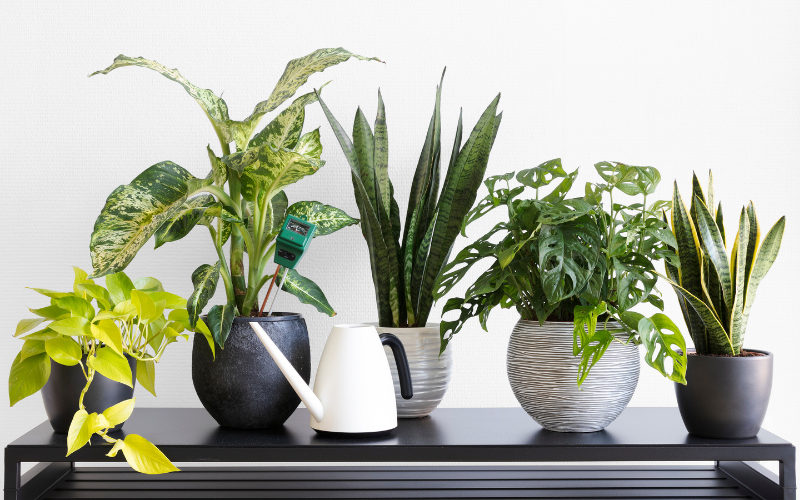
Low-Maintenance Indoor Plants to Get Started
As you dive into the world of gardening for beginners, it is important to remember that there are indoor plants that require more attention and some varieties that require less maintenance. As a beginner plant parent, it is best to start with plants that do not require much attention.
Here are 3 low-maintenance indoor plant recommendations:
- Pothos Plant: The pothos plant, also known as pipremnum aureum, can be seen all over the place. This plant can thrive in various light conditions and is easy to care for. If you tend to be forgetful this plant might be right for you. Pothos plants can be brought back to life even if you are not diligent with watering regularly. Water these indoor plants well but allow them to completely dry out between watering them. For best results, grow them in bright, indirect light.
- Snake Plant: The snake plant, also known as sansevieria, is beautiful and has been a trendy plant to include in homes in the interior design world. This almost indestructible plant is said to thrive from neglect. In winter months, you can water it every 3-4 weeks. In summer months, with more sunlight, it may require waterings every week to every other week. They grow in indirect sunlight and release oxygen at nighttime. They make a great plant next to your bed, in your home office, or in your yoga room.
- Zanzibar Gem Plant: The Zanzibar gem plant, also known as zamioculcas zamiifolia, can thrive with infrequent watering and low light conditions. Like Snake Plants, they prefer indirect sunlight. It’s also best to make sure they dry out fully between waterings, and that there’s good drainage since they can quickly rot if the potting mix remains too soggy. This tropical looking plant could be perfect for those who do not have much natural sunlight coming into their space but want something a little bit fancier.
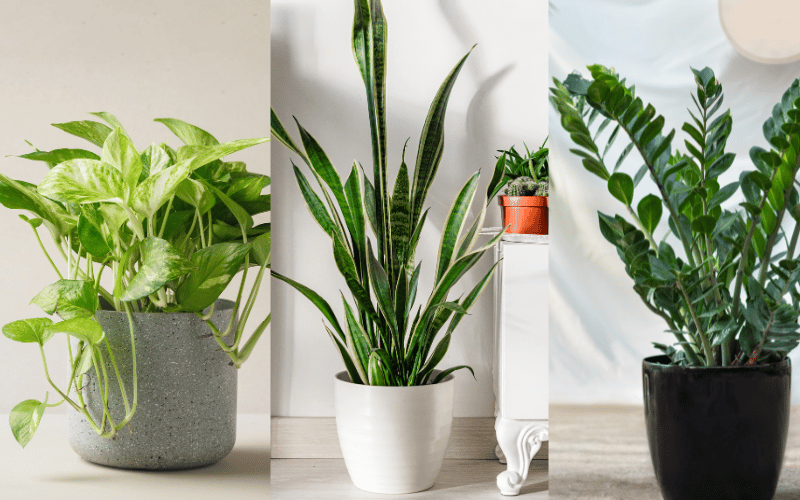
These are 3 indoor plants that are perfect for anyone who swears they don’t have a “green thumb” Starting with “easy” houseplants can build confidence and help get into the habit of a regular plant maintenance routine and can turn a new gardener into a more seasoned plant parent.
Selecting The Best Location
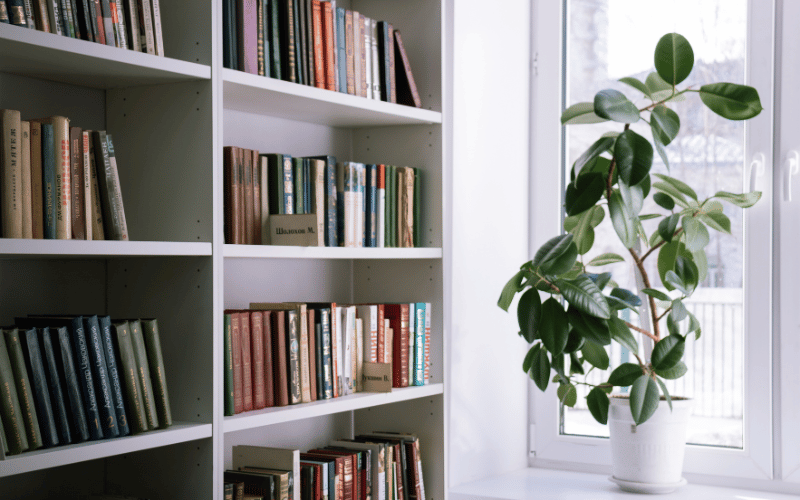
Choosing an ideal location in your house or apartment is essential when you begin your indoor plant garden journey. It is important that your plants are able to receive the amount of natural sunlight that best suits their unique needs. South-facing windows typically receive the most sunlight during the day. You can locate the south-facing windows by using a compass app on your phone.
Depending on what type of houseplants you decide to start your indoor garden with will determine the correct placement. Bright and direct light is best for succulents; whereas plants like the spider plant are best suited for bright indirect light. As previously mentioned, the Zanzibar gem plant is great as they require only low light to thrive.
An additional tip if you are not able to determine what type of light each location and window produces is to track for a few days. If there is minimal natural light in your space, there is always the option of purchasing a grow light. A grow light can mimic natural sunlight to a certain extent so your plants can continue to grow in spaces where natural light is not present.
Only Water as Needed
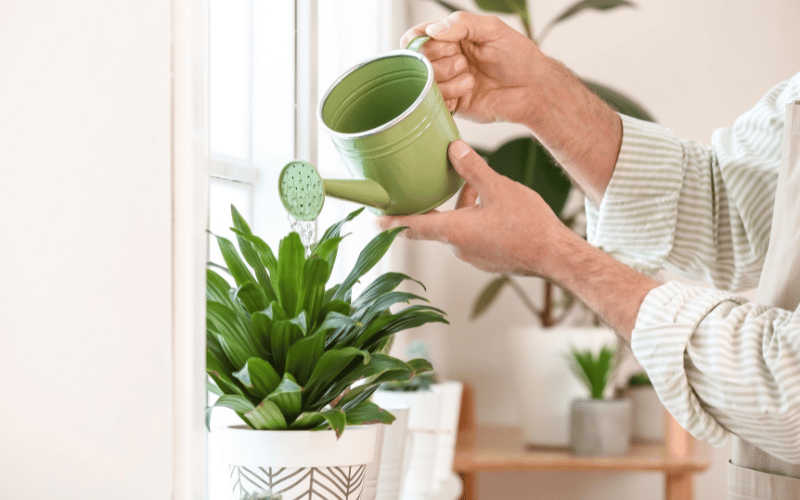
Overwatering is a common mistake for new plant parents. It can feel like there are so many rules to follow to properly take care of your houseplants. Some might think overwatering is better than underwatering your plants. However, both can negatively affect your plants' lifespan.
To check if the soil is sufficiently moist you can stick your finger in and if the soil feels dry then it's a clear indication that you need to water your plant soon. The amount of water needed for each plant depends on the variety of plants and the size, and drainage, of the pot, as well.
Do not overwater as plants do not like sitting in a pool of water. There are usually drainage hole cutouts at the bottom of pots to avoid water build up.
Remember that each houseplant has its own water needs. This also varies depending on the season so research and water accordingly. And give yourself some grace if you happen to make the overwatering rookie mistake, costing you an indoor plant or two in the process.
Select the Perfect Pot and Soil for your Indoor Plant
You are almost officially a plant parent. This means preparing the perfect home for your plant babies. It is important to choose a home that suits your houseplants. Indoor plant pots come in a variety of materials, such as terracotta, clay, ceramic, and fiberglass, to name a few. Search for pots that have drainage holes, so your plants don’t drown in the case of excess watering.
The right soil can also be important for your houseplants to thrive. There are readily available potting mixes that are specifically designed for indoor plants. Many potting mixes for indoor plants are made from peat moss or coco coir, worm castings, vermiculite, and sometimes small rocks to promote excess drainage. Make sure to select a soil that will work well for your choice of houseplants. For a succulent plant, like a Haworthia, a sandy, well-draining soil is optimal, since they are susceptible to root rot. However, for a tropical plant, a moisture-retaining soil mixture is better suited.
Choosing the correct soil will ensure that your indoor plants are well-supported. Plant roots are dependent on having good-quality soil so choose wisely.
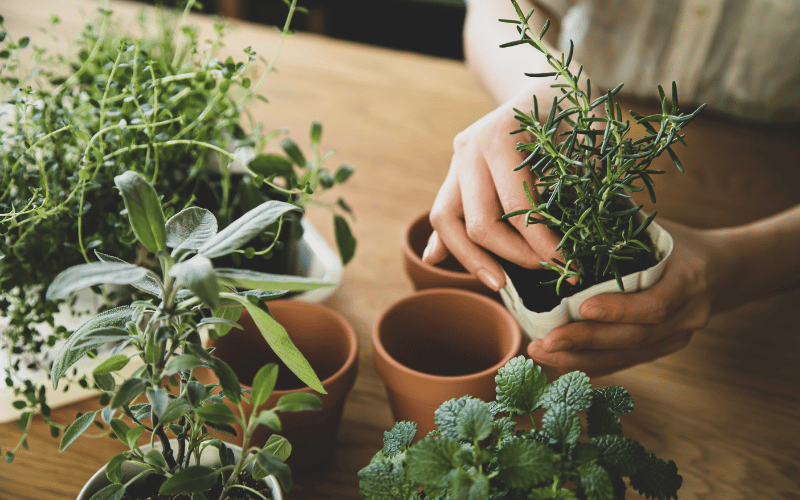
Now that we have run through the basics here are a couple of additional quick tips to make your indoor plant garden flourish as a beginner plant parent.
Group Similar Plants Together
This might go without saying, but adding similar plants together will make your indoor garden look lush, and you can take care of them in a similar fashion to make your life easier. Being creative and adding different varieties of plants together might look beautiful; however, it takes a lot more planning to maintain and keep them healthy and happy.
Purchase the Necessities
Purchasing a few essentials can make your indoor gardening journey as a beginner a lot easier. Here are a few tools that will save you time and energy:
- Watering Can: Preference goes to one with a very narrow spout to ensure you can access the roots rather than watering the leaves, which can cause rot. Keep this handy so you are reminded to water your plants.
- Moisture Meter: When in doubt, use this tool to determine how much water your plants really need.
- Plant Scissors or Shears: Instead of plucking by hand, use shears to gently cut away any dead leaves from your houseplants.
- Plant Labels: Use labels to name your indoor plants and keep them organized, or to mark the watering frequency needed.
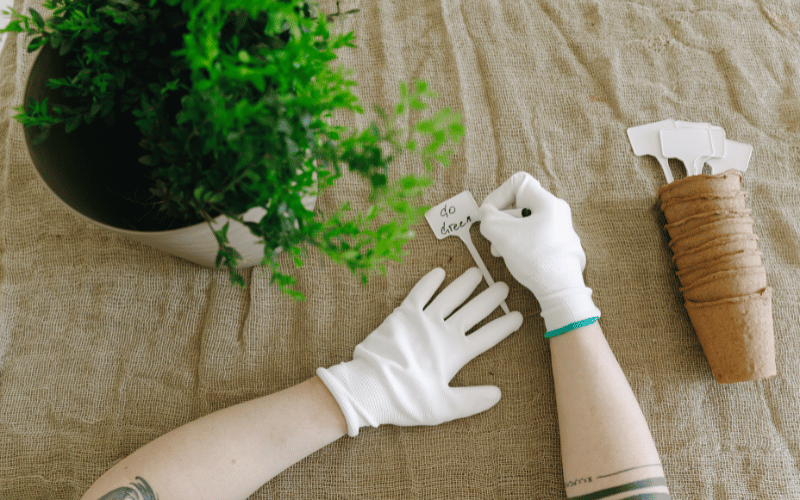
An indoor plant garden is the perfect little oasis to retreat to when life gets stressful. It might look like a lot of work but with these simple tips you can feel confident in your gardening skills as a beginner plant parent. And the mental and emotional benefits to gardening have been well documented. Remember that plants are living creatures just like yourself and require some tender loving care to flourish.
If you are just stepping into the gardening world, check out one of our home and garden shows happening near you! You can shop for the perfect indoor plants, get inspired by unique home-related features, and get in-person advice on how to care for your new plant babies!